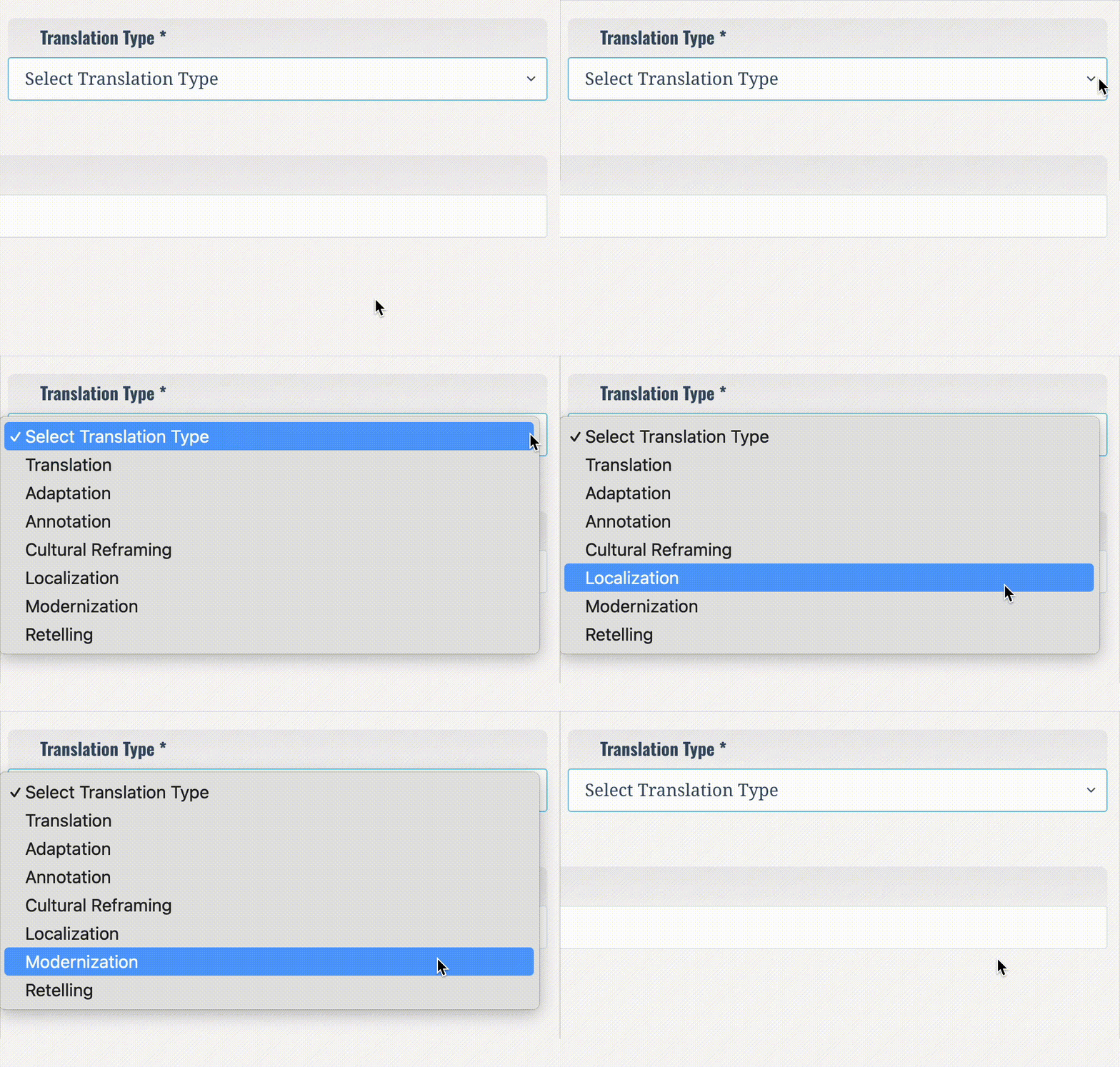
Translation #
The work changes the language or dialect of the original work, while generally aiming to preserve the original text and intent of the work without intentional altering or deviation.
Example: Abraham Sybant’s De Dolle Bruyloft: Bly-eyndend’-Spel is a Dutch translation of The Taming of the Shrew dating back to 1654, while one of the first translations of the entirety of Shakespeare’s major plays was the French Œuvres complètes de W. Shakespeare by François-Victor Hugo starting in 1859.
Adaptation #
The work changes the format or style of the original, either from a different type of written work such as a poetry or recipe, or to an entirely different medium such as film, radio, television, or opera, and may preserve as much as the full original text of the work to as little as the abstracted narrative themes without a single directly shared name or event.
Example: Ryan North’s To Be or Not To Be adapts Hamlet into an illustrated “choose your own adventure” book with a tone, characterization and variety of additions and outcomes that skew greatly from the original source material.
Annotation #
Footnotes, marginalia, and other meta-textual elements that give description, further detail or perspective on a work that is generally still included, all or in part. This can also encompass works that are themselves annotations of previous annotations.
Example: The Variorum Editions of Shakespeare starting with Isaac Reed’s 1803 release now chronicle over two centuries of analysis that not only analyzes, interprets and argues on the text, but also analyzes those analyses across generations of international dispute.
Modernization #
The work alters the original into a more contemporary, modern-day context, either in its setting or language, with accompanying changes to the tone, genre conventions, and other identifying details of fictionalized modern culture.
Example: Baz Luhrmann’s 1996 film Romeo + Juliet sets The Tragedy of Romeo and Juliet in a nineties setting with firearms, vehicles and modern naming conventions.
Retelling #
Footnotes, marginalia, and other meta-textual elements that give description, further detail or perspective on a work that is generally still included, all or in part. This can also encompass works that are themselves annotations of previous annotations.
Example: The Variorum Editions of Shakespeare starting with Isaac Reed’s 1803 release now chronicle over two centuries of analysis that not only analyzes, interprets and argues on the text, but also analyzes those analyses across generations of international dispute.
Cultural Reframing #
The work places elements of the original within a different cultural context which adapts its characters, concepts and narrative elements into ones which better correspond to the culture they are adapted to.
Example: Akira Kurosowa’s film Ran sets elements from the plot of King Lear in the Sengoku period of Japan around the 16th century, with the warlord acting as equivalent to the king.
Localization #
The work adapts certain names and/or concepts of the original into different cultural or regional equivalents, rather than simply changing the language of the original.
Example: Shi Yu-kun’s opera The Revenge of Prince Zi Dan primarily follows the plot of Hamlet, but alters names, characterizations, visual and other elements throughout its cultural translation.